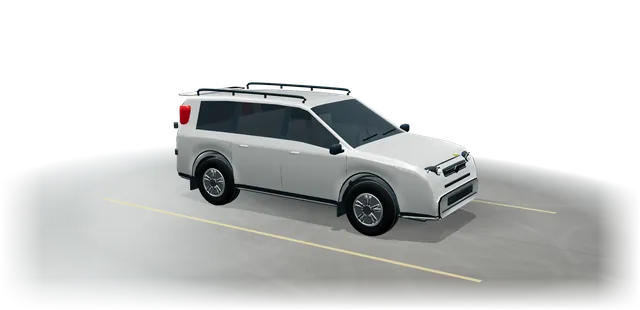
What to check on a 2006 to 2012 Toyota RAV4, and when to change it
The short answerChange the oil every 5 months or 5,000 miles, whichever comes first, and check the level between changes, because 2006 to 2008 four-cylinders can burn oil. All three engines use a timing chain. The 2009 refresh brought the 2.5L engine. Plugs are due at 120,000 miles and coolant at 100,000. Check your VIN for the rear suspension arm recall. Call (805) 745-1992.
See our services on a 3D SUV
Pick one of our services, or start with what your SUV is doing. All 35 parts are named, with what to check and when to change each one.
It loads only when you ask, so this page stays fast.
Drag to turn the SUV. Pinch, or hold Ctrl and scroll, to zoom. Pick a service and the SUV turns see-through so its parts stand out.
Start here
Pick a service
Choose one of our services and the SUV shows every part it covers. Not sure which? Switch to “By symptom” and start with what it’s doing.
What to ask about, and when
Pick the point closest to where you are. You’ll get the list of what usually comes up around then, and you can show it on the SUV.
Last updated October 19, 2026.
This is a simplified model, not a factory drawing. Part positions are approximate and intervals are typical ranges. Your owner’s manual, your service records and how you drive decide the real schedule. Under-hood positions follow the usual layout for this model and were not checked against a factory drawing. Recall and warranty details come from Toyota and NHTSA documents listed below. We’ll tell you what we see when you bring it in.
Open a system to read about its parts: what each one does, what to check, when to change it, and the service that covers the work.
Engine 8 parts
1Engine oil and filter
Owners report this one
Oil keeps the moving parts of the engine from grinding on each other and carries heat away. The filter catches the grit.
What to check
Pull the dipstick at the front of the engine with the car level and the engine off for a few minutes. On a 2006 to 2008 four-cylinder check it every few fill-ups, because owners commonly report these engines using oil between changes.
When to change it
Every 5 months or 5,000 miles, whichever comes first. The manual lists 0W-20 or 5W-20 for the four-cylinders and 5W-30 for the V6. Some later 0W-20 models were given a longer interval, so check your manual.
It keeps dust out of the engine. A clogged filter makes the engine work harder for the same power.
What to check
The filter sits in a black plastic box on the driver side of the engine bay. Unclip the lid and hold the filter to the light. If you can’t see light through it, it is due.
When to change it
Typically every 30,000 miles, sooner if you drive dusty roads.
The plugs light the fuel in each cylinder. Each plug has its own ignition coil sitting on top of it.
What to check
A rough idle, a shake under load or a flashing check engine light points to a misfire. Owners report failed ignition coils on these as they age.
When to change it
The factory plugs are long-life iridium and are typically due at 120,000 miles. On the V6 the rear three plugs sit against the firewall and take more labor.
On the 3.5L V6 a short oil line feeds the variable valve timing parts. Early versions had a rubber section.
What to check
Toyota found the rubber section can break down and leak oil, which can bring on engine noise and the oil pressure light. If the oil light comes on, stop the engine. A Toyota campaign covered 2006 to 2009 V6 models, so ask a dealer if yours was done.
When to change it
Not a routine item. It is replaced once with the updated part if the car still has the old hose.
Rubber and fluid-filled mounts hold the engine and transaxle to the body and soak up vibration.
What to check
Notice a clunk when shifting between drive and reverse, more vibration at idle, or an engine that rocks a lot when revved. Look for cracked or collapsed rubber.
When to change it
Replaced when torn or collapsed. There is no set interval.
It pushes coolant through the engine and radiator.
What to check
Look for pink crusty residue or a damp trail at the passenger side end of the engine, and watch for a slowly dropping coolant level. Owners report water pump leaks on these, most often on 2006 to 2008 models.
When to change it
No set interval. It is replaced when it leaks or the bearing gets noisy.
The radiator sheds engine heat into the air. Two electric fans pull air through it when the car is slow or stopped.
What to check
Look through the grille for bent fins, leaves and bugs. Squeeze the big hoses when cold. They should feel firm, with no bulges or soft spots. Never open the radiator cap hot.
When to change it
No set interval. Hoses and the radiator are replaced when they leak, swell or the plastic end tanks crack.
Coolant carries heat from the engine to the radiator and protects the metal from corrosion.
What to check
With the engine cold, the level in the white overflow bottle on the passenger side should sit between the low and full lines. The factory fill is pink Toyota Super Long Life Coolant. Never open the radiator cap hot.
When to change it
Toyota’s long-life coolant is typically changed first at 100,000 miles or 10 years, then every 50,000 miles or 5 years. Check your manual.
A belt-driven compressor pumps refrigerant through a condenser in front of the radiator to cool the cabin.
What to check
Run the A/C on a warm day. Notice air that isn’t cold, a compressor that clicks on and off quickly, a musty smell, or water on the passenger floor. Look for oily residue on the A/C lines and fittings.
When to change it
There is no set interval. It gets repaired when it stops cooling or leaks. A clogged cabin air filter also weakens the airflow.
We service car A/C. See our A/C repair page, or call (805) 745-1992.
The tank sits under the rear of the car and an electric pump inside it feeds the engine. The fuel filter is part of the pump unit in the tank.
What to check
The fuel door is on the driver side, opened by a lever on the floor by the driver’s seat. The small arrow by the fuel gauge points to the correct side. Click the cap until it ratchets. A loose cap is a common cause of a check engine light.
When to change it
There is no routine fuel filter change on these. The cap seal is replaced if it cracks.
Ask us about fuel system work on your RAV4.
11Exhaust and catalytic converter
The exhaust carries burned gas to the back of the car. The catalytic converter cleans it and oxygen sensors tell the engine how it is running.
What to check
Listen for a louder exhaust note, a rattle underneath or a ticking at the front of the engine when cold. Near the beach, look for rust at the joints and hangers.
When to change it
No set interval. Parts are replaced when they leak, rattle or set a check engine light.
Ask us about exhaust work on your RAV4.
34Oxygen and air-fuel sensors
Sensors in the exhaust measure how much oxygen is left after burning, so the engine computer can set the fuel mixture.
What to check
A check engine light is the usual sign. Fuel economy may drop. A scan tool reads which sensor is reporting.
When to change it
Replaced when one fails or reads slow. There is no set interval.
The fluid cools and lubricates the automatic and makes the shifts happen. Four-cylinders have a four-speed automatic and the V6 has a five-speed.
What to check
There is no simple owner check on most of these. Watch for red drips under the front of the car, slipping, or harsh or late shifts.
When to change it
The manual calls for Toyota ATF WS only. Toyota typically asks for inspection in normal driving and a change around 60,000 miles if you tow or work the car hard. Check your manual.
On 4WD models a small gearbox on the transaxle sends power to the rear. Front-wheel-drive models do not have one.
What to check
Look for gear oil seeping where it bolts to the transaxle. Gear oil has a strong sulfur smell.
When to change it
It holds about half a quart of GL-5 gear oil. Toyota typically asks for inspection, with a change if you tow or drive dirt roads. Many shops refresh it around 30,000 to 60,000 miles. Check your manual.
On 4WD models a propeller shaft runs to an electronic coupling and a small rear differential. The car drives the front wheels and sends power to the rear when it is needed.
What to check
Look for oil on the differential housing and listen for a whine or hum from the back at steady speed. A 4WD warning light means the system needs a look.
When to change it
It holds about half a quart of GL-5 gear oil. Toyota typically asks for inspection, with a change under towing or dirt road use. Check your manual.
Brake fluid carries the push from your foot to the brakes. It takes on moisture over time.
What to check
The reservoir is at the back of the engine bay on the driver side. The level should sit between the lines and the fluid should look clear to light amber. If the pedal sinks, don’t drive.
When to change it
The manual lists DOT 3. Toyota does not give a firm interval, and it is commonly changed every 2 to 3 years.
The rear wheels are held by a double-wishbone setup with adjustable arms that set the rear wheel alignment.
What to check
Toyota recalled 2006 to early 2011 RAV4s because the adjustable rear arms can rust and separate if the alignment nuts were not tightened properly. Check your VIN at nhtsa.gov/recalls. A loose or wandering feel from the back needs a look right away.
When to change it
No set interval. Under the recall, a Toyota dealer replaces both arms and seals the adjusters.
Ask us to look over the rear arms when we check your alignment. Recall work itself is done by a Toyota dealer.
An electric motor on the steering column gives the assist. There is no power steering pump and no fluid to check or change.
What to check
Owners commonly report a clunk or pop felt through the wheel when turning at low speed, which is usually traced to the intermediate steering shaft. Also look for torn boots on the steering rack and loose tie rod ends.
When to change it
No fluid service. Worn shafts, tie rod ends and boots are replaced as needed.
Ask us about steering noises. An alignment follows most steering repairs.
Four patches of rubber do all the gripping, stopping and steering.
What to check
Check pressures monthly against the sticker in the driver door jamb. Look for uneven wear, which points to alignment. Factory sizes were 215/70R16, 225/65R17 and 235/55R18 on the Sport.
When to change it
Rotate about every 5,000 miles. Replace when the tread is near the wear bars or the tires are about 6 years old or more.
Most of these carry a full-size spare bolted to the outside of the rear door. Models with the Sport Appearance Package have run-flat tires and no spare.
What to check
Take the cover off and check the spare’s pressure and age a couple of times a year. With run-flats, the manual allows up to about 100 miles under 55 mph after the pressure light comes on.
When to change it
Replace the spare if it is cracked or about 10 years old, even if it has never been on the road.
The battery starts the engine and steadies the electrical system.
What to check
It sits at the front of the engine bay on the driver side. Look for white or green crust on the terminals and make sure the hold-down is tight. Slow cranking is the usual first sign.
When to change it
Typically every 4 to 6 years. Salt air can shorten that.
Fuses protect each circuit. There are fuse and relay boxes under the hood and one inside under the dash.
What to check
If one thing stops working, check its fuse first. The diagram is inside the box lid and in the manual. Toyota also recalled the power window master switch on some years, so check your VIN.
When to change it
Replace a blown fuse with the same amp rating only. A fuse that blows again means a fault that needs tracing.
Walk around the car once a month with the lights on. Have someone press the brake pedal, and check the high brake light too. Cloudy headlight lenses cut your light at night.
When to change it
Bulbs are replaced when they burn out. Cloudy lenses can commonly be polished.
Front wipers and a rear wiper on the back door keep the glass clear. The washer bottle feeds both.
What to check
Streaks or chatter mean the blades are done. The washer filler has a blue cap at the front of the engine bay on the passenger side. Toyota recalled some later models, including 2009 and 2010, for a wiper linkage that can corrode, so check your VIN.
When to change it
Blades typically last 6 to 12 months in coastal sun.
We stock Michelin wiper blades in the front office. Ask us to fit a pair.
Frame and body 2 parts
30Cabin air filter
It cleans the air coming through the vents.
What to check
It sits behind the glove box. Weak airflow or a musty smell from the vents means it is clogged.
When to change it
Typically every 15,000 to 30,000 miles or once a year. Sooner if you drive dusty roads.
Ask us to check the cabin filter at your next service.
The rear door is hinged on the passenger side and swings out sideways. It carries the weight of the spare tire.
What to check
The door should open smoothly, hold open, and close without you having to lift it. Look for sag, rust at the hinges and a worn check strap. Under the car, look for rust on the rear subframe and brake lines if the car lives near the ocean.
When to change it
No set interval. Lubricate the hinges and latch about once a year.
Ask us about rear door and body concerns and we will tell you what we can help with.
Questions owners ask
Does the 2006 to 2012 RAV4 have a timing belt or a timing chain?
All three engines use a timing chain. That covers the 2.4L four-cylinder (2006 to 2008), the 2.5L four-cylinder (2009 to 2012) and the 3.5L V6. There is no scheduled timing belt change. Clean oil at the right level is what keeps the chain healthy.
What changed with the 2009 refresh?
For 2009 Toyota replaced the 166 hp 2.4L four-cylinder with a 179 hp 2.5L four-cylinder, still with a four-speed automatic. The front end got a new grille and bumper and the rear was tidied up. Active front headrests were added. A Sport Appearance Package arrived with run-flat tires and no spare on the rear door. The V6 and its five-speed automatic carried on.
Why does my 2006 to 2008 RAV4 use oil?
The 2.4L engine in those years is known for oil consumption as the miles add up. Toyota ran a warranty enhancement program for it, code ZE7, which has time and mileage limits that have passed for most cars. Check the dipstick every few fill-ups and top up before the level gets low. A Toyota dealer can tell you if anything still applies to your VIN.
What oil does my RAV4 take?
The 2011 owner’s manual lists SAE 0W-20 or 5W-20 for the 2.5L four-cylinder, about 4.7 quarts with a filter. It lists 5W-30 for the 3.5L V6, about 6.4 quarts with a filter. The earlier 2.4L is listed at 0W-20 or 5W-20 and about 4.5 quarts. Check your own manual or the oil cap to be sure.
Which recalls should I check on a 2006 to 2012 RAV4?
The big one is the rear suspension arm recall on 2006 to early 2011 models, where the rear tie rod arms can rust and separate if the alignment nuts were not tightened properly. There were also accelerator pedal and floor mat recalls, a power window switch recall and a rear seat belt recall on some years. Enter your VIN at nhtsa.gov/recalls to see what is open on your car.
Does the RAV4 have power steering fluid?
No. This generation uses electric power steering, so there is no pump, no reservoir and no fluid to change. If you hear a clunk or pop through the wheel when turning at low speed, owners commonly trace that to the intermediate steering shaft.