Owner’s guide, Class B and Class C motorhomes on the Sprinter chassis
What to check on a 2007 and newer Sprinter chassis motorhome, and when to change it
The short answerA Sprinter motorhome is a rear-wheel-drive Mercedes diesel under a camper body. It needs low-ash oil that meets the Mercedes spec, a fuel filter at each service, fresh brake fluid every two years on 2007 to 2018 models, and diesel exhaust fluid on 2010 and newer. Tires usually age out before they wear out. Call (805) 745-1992.
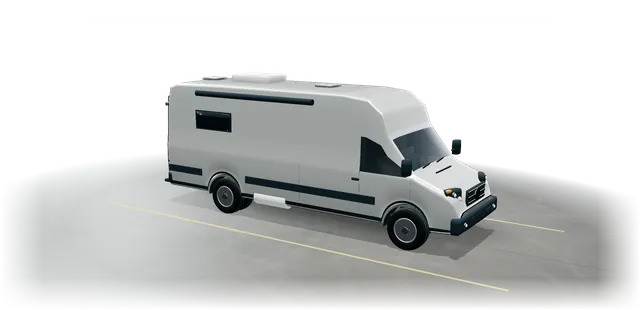
See our services on a 3D motorhome
Pick one of our services, or start with what your motorhome is doing. All 35 parts are named, with what to check and when to change each one.
It loads only when you ask, so this page stays fast.
Drag to turn the motorhome. Pinch, or hold Ctrl and scroll, to zoom. Pick a service and the motorhome turns see-through so its parts stand out.
Start here
Pick a service
Choose one of our services and the motorhome shows every part it covers. Not sure which? Switch to “By symptom” and start with what it’s doing.
What to ask about, and when
Pick the point closest to where you are. You’ll get the list of what usually comes up around then, and you can show it on the motorhome.
Last updated October 19, 2026.
This is a simplified model, not a factory drawing. Part positions are approximate and intervals are typical ranges. Your owner’s manual, your service records and how you drive decide the real schedule. The model is a typical 24-foot Class C. Coach layouts differ by builder, and several under-hood positions are placed generically. We’re a mechanic and tire shop, so call first about diesel and coach work and we’ll tell you straight what we can do. We’ll tell you what we see when you bring it in.
Every 10,000 miles or once a year: Oil level, DEF top up, tire pressures and a look underneath. Oil and filter change on 2007 to 2009 models.
Every 20,000 miles or 2 years: Mercedes Service A on 2010 and newer: oil and filter, fuel filter, belt check. Brake fluid every 2 years on 2007 to 2018.
Every 40,000 miles or 4 years: Mercedes Service B: everything in Service A plus the engine air filter and a closer inspection.
Around 80,000 miles: Serpentine belt and transmission fluid per the booklet for your year. Brakes, shocks and struts get a hard look on a heavy coach.
100,000 miles and beyond: Glow plugs, diesel particulate filter check, NOx sensors and oil cooler seals are the usual high-mileage items. Coolant and axle oil are long-life.
Open a system to read about its parts: what each one does, what to check, when to change it, and the service that covers the work.
Engine 8 parts
1Engine oil and filter
Oil keeps the diesel and its turbo alive. On a Sprinter it also has to be a low-ash type so it does not clog the particulate filter.
What to check
Check the level before a trip. Some years have a dipstick and others show the level on the dash display, so see which yours has. The cartridge oil filter sits on top of the engine. Look under the coach for fresh drips.
When to change it
We change oil and filter every 5 months or 5,000 miles, whichever comes first. For reference, Mercedes lists 10,000 miles on 2007 to 2009 models, and 20,000 miles or 2 years on 2010 and newer. A motorhome that sits or makes short trips is commonly serviced sooner. Use oil with Mercedes approval 229.51 or 229.52, or 228.51. The V6 holds about 13 quarts.
A diesel has no spark plugs. Six glow plugs on the V6, or four on the four-cylinder, warm the cylinders so it starts cleanly when cold.
What to check
Watch for a glow plug light that stays on, hard cold starts, rough running or white smoke for the first minute.
When to change it
There is no fixed interval. Sources put typical life around 80,000 to 120,000 miles. Old plugs can seize in the head, so this is a job for a shop with the right tools.
Ask us to check the glow plugs if cold starts get rough.
4Turbocharger and intercooler hoses
Owners report this one
The turbo pushes extra air into the engine and the hoses carry that air through the intercooler. A leak anywhere means lost power.
What to check
Listen for a hiss or whoosh under load. Look for oily, split or loose rubber hoses and clamps between the turbo, intercooler and intake. Owners of 2007 to 2010 V6 models report the intake hose popping off the resonator.
When to change it
No set interval. Hoses and seals are replaced when they crack, soften or leak. A sudden loss of power with a warning light is the usual sign.
5EGR valve and intake swirl flaps
Owners report this one
The EGR valve feeds some exhaust back into the intake to cut emissions. Swirl flaps in the intake manifold shape the airflow. Soot builds up on both.
What to check
Watch for a check engine light, flat spots, black smoke or limp mode. A failed swirl flap motor is a commonly reported fault on the V6.
When to change it
No set interval. They are cleaned or replaced when a fault shows up.
Ask us to scan the codes first. It often points straight to the part.
6Oil cooler seals (V6)
Owners report this one
The V6 has an oil cooler tucked in the valley between the cylinder banks. Its rubber seals harden with heat and age and start to leak.
What to check
Look for oil on the back of the engine, on the transmission bellhousing or dripping near the middle of the van, and a hot oil smell after a drive.
When to change it
No set interval. Sources say the seals commonly start leaking somewhere around 80,000 to 120,000 miles. It is a big job because the intake and turbo come off.
Ask us to look at any oil leak before it gets onto belts and hoses.
7Fuel injector seals
Owners report this one
Each injector seals to the head with a small copper washer. If one leaks, combustion gas escapes and bakes into hard black tar that owners call black death.
What to check
Listen for a chuffing or ticking sound at idle and sniff for exhaust smell under the hood. Black crusty buildup around an injector is the giveaway.
When to change it
No set interval. Fix a leaking seal early, before the tar buries the injector.
Ask us to check around the injectors when the engine cover is off.
8Serpentine belt
One ribbed belt drives the alternator, water pump and air conditioning compressor. The camshafts are driven by a chain, so there is no timing belt to change.
What to check
Look for cracks, fraying or shiny glazed ribs, and listen for squeal or chirp at start up.
When to change it
Mercedes has it inspected at each service and replaced at every second Service B on 2010 and newer, which works out to about 80,000 miles. The earlier schedule lists 60,000 miles.
Coolant carries heat from the engine to the radiator and feeds the cab heater. A loaded motorhome on a long grade works this system hard.
What to check
Check the level in the plastic tank under the hood with the engine cold. Never open the cap hot. Look for crusty residue at hose ends and under the water pump, and watch the temperature gauge on hills.
When to change it
The 2010 and 2012 Mercedes booklets list 150,000 miles or 15 years. The newer fleet brochure lists a shorter interval, so check the booklet for your year. Use only Mercedes-approved coolant.
A belt-driven compressor pumps refrigerant through a condenser in front of the radiator to cool the cabin. This is the cab A/C. The roof air conditioner on the coach is a separate unit.
What to check
Run the A/C on a warm day. Notice air that isn’t cold, a compressor that clicks on and off quickly, a musty smell, or water on the passenger floor. Look for oily residue on the A/C lines and fittings.
When to change it
There is no set interval. It gets repaired when it stops cooling or leaks. A clogged cabin air filter also weakens the airflow.
We service car A/C. See our A/C repair page, or call (805) 745-1992.
It catches dirt and water before they reach the high-pressure pump and injectors. Diesel injection parts do not forgive dirty fuel.
What to check
Watch for a water-in-fuel light, hard starting, stumbling under load or a diesel smell under the hood.
When to change it
Mercedes replaces it at every Service A and B on 2010 and newer, which is every 20,000 miles or 2 years. Change it sooner after a bad tank of fuel.
Ask us whether we can do the fuel filter with your oil service.
11Diesel exhaust fluid (DEF or AdBlue)
Owners report this one
BlueTEC Sprinters from 2010 on spray this urea and water mix into the exhaust to cut NOx. Without it the van will warn you and then refuse to restart.
What to check
The filler is a blue cap under the hood. Top up when the dash asks, and add at least a gallon and a half so the gauge resets. Rinse any spills with water. Owners report DEF tank heater faults that set a check engine light.
When to change it
It is a top-up item, checked at every service. Owners commonly add a jug every few thousand miles. DEF goes stale with heat and age, so buy fresh sealed jugs.
Ask us to top up the DEF while your coach is in for an oil change.
12Diesel particulate filter
Owners report this one
It traps soot in the exhaust and burns it off when the exhaust gets hot enough on a long drive.
What to check
Short trips and long idling do not let it clean itself. Watch for a warning light, loss of power or the fan running hard after shut off. A steady highway drive helps.
When to change it
No routine replacement. Mercedes checks it from about 100,000 miles on. Using the correct low-ash oil is the best protection.
Ask us about exhaust and emissions work on your Sprinter. Some of it belongs at a Mercedes dealer.
13NOx sensors and SCR catalyst
Owners report this one
Two sensors measure NOx before and after the SCR catalyst so the computer knows the DEF system is working.
What to check
A check engine light followed by a countdown of remaining starts is the common sign. Sources say the sensors often fail around 80,000 to 120,000 miles.
When to change it
No set interval. On many 2010 to 2016 BlueTEC Sprinters these parts carry an extended warranty after the approved emissions update, so check with a dealer before paying for one.
Ask us to read the code. If it is a covered emissions part we will send you to the dealer.
Drivetrain 2 parts
14Automatic transmission fluid
The V6 through 2018 uses a 5-speed automatic. The four-cylinder from 2014 and the 2019 to 2022 vans use a 7-speed, and 2023 and newer use a 9-speed. Each needs its own Mercedes fluid.
What to check
There is no simple dipstick check on these. Watch for harsh or slipping shifts, a shudder at steady speed or red fluid drips under the middle of the coach.
When to change it
The 2010 booklet has fluid and filter at every second Service B, about 80,000 miles. Other years differ, so check the booklet. The 5-speed takes fluid to sheet 236.14 and the 7-speed takes 236.15. They do not mix.
Gear oil in the rear axle lubricates the gears that turn the back wheels. Sprinters sold here are rear-wheel drive, with 4x4 as an option from 2015.
What to check
Look for oil wetness on the axle center, at the pinion seal where the driveshaft joins, and on the inside of the rear wheels.
When to change it
Mercedes lists it as long-life, 150,000 miles or 10 years in the 2012 booklet. A heavy coach that tows may deserve an earlier change. It takes a 75W-90 synthetic gear oil.
Ask us to check the level and look for leaks when the coach is on the lift.
The Sprinter has disc brakes at the rear as well. The parking brake holds the coach on a slope.
What to check
Listen for grinding from the back and make sure the parking brake holds. On 2019 and 2020 models there is a recall for rear calipers that can leak fluid on vans with the electric parking brake. Check your VIN at nhtsa.gov/recalls.
When to change it
By wear. Rotors on a coach that sits can rust and pit, so they are sometimes replaced before the pads wear out.
Brake fluid carries your foot pressure to the calipers. It soaks up moisture over time, which lowers its boiling point on long downgrades.
What to check
The reservoir is under the hood. The level should sit between the marks and the fluid should be clear to light amber. If the pedal sinks or feels spongy, don’t drive.
When to change it
Mercedes lists every 2 years on 2007 to 2018 models, whatever the mileage. Newer models may list a longer interval, so check the booklet. It takes DOT 4 plus fluid.
The front is independent, with a strut at each wheel and one leaf spring running side to side across the van. Ball joints and a sway bar tie it together.
What to check
Feel for wander, clunks over bumps or a nose that dives when braking. Look for oily struts and uneven wear on the front tires.
When to change it
No set interval. Struts and ball joints wear faster under a heavy coach. Have an alignment checked when tires are replaced.
Ask us about front end work when we check your alignment.
A solid rear axle hangs on leaf springs with a shock at each side. They carry most of the coach weight.
What to check
Look for a coach that sits low or leans, cracked leaves, worn spring bushings and oily shocks. Side to side rocking in crosswinds is a common owner complaint on Sprinter Class C coaches.
When to change it
No set interval. Shocks commonly tire out well before the springs do on a heavy coach.
2007 to 2018 Sprinters use hydraulic power steering with its own fluid. The 2019 and newer vans moved to electric assist.
What to check
Listen for a groan when turning at low speed and look for fluid on the steering rack boots. Feel for looseness or a wheel that does not return to center.
When to change it
No routine change is listed. Top up only with the fluid Mercedes specifies, and fix leaks early.
Ask us to check the steering when we do your alignment.
Load range E light truck tires carry the whole coach. The 3500 commonly runs LT215/85R16 on six wheels and the 2500 runs LT245/75R16 on four.
What to check
Set pressures cold to the door placard before every trip, including the inner duals. Look for sidewall cracks, bulges and uneven wear. Read the four-digit date code on the sidewall.
When to change it
By tread wear or age. Motorhome tires commonly age out before they wear out, so many tire makers suggest a professional inspection after 5 or 6 years and replacement by 10 at the latest.
Each wheel is held by six lug bolts. A 3500 has two wheels per side at the rear, and its bolt pattern is different from the single rear wheel 2500.
What to check
Look for rust streaks from a lug hole, which can mean a loose bolt. Check that the inner dual valve stems can be reached and that nothing is wedged between the duals.
When to change it
No interval. Have lug bolts torqued to the Mercedes figure, and rechecked after the first 50 miles or so whenever a wheel has been off.
It starts the diesel and runs the chassis electronics. On a Sprinter it lives under the floor at the driver’s feet, with jump-start posts under the hood.
What to check
Slow cranking or warning lights at start up are the signs. A coach in storage drains it, so use a maintainer. Many of these vans need an AGM battery.
When to change it
Typically every 4 to 6 years. Replace it with the same type the van came with.
Fuses protect each chassis circuit. The Sprinter has more than one fuse box, and the coach builder adds its own panel for the house side.
What to check
The chassis fuse boxes are under the dash and in the driver’s seat base. A blown fuse for the engine sensors can be enough to cause limp mode. Check lights and wipers before each trip.
When to change it
Only when one blows. A fuse that blows twice means a fault that needs tracing.
Rubber blades clear the big windshield. A small pump sprays washer fluid from a bottle under the hood.
What to check
Look for streaks, chatter or torn rubber. Top up the washer bottle under the hood.
When to change it
Blades about every 6 to 12 months, sooner in strong sun.
We stock Michelin wiper blades in the front office. Ask us to fit a pair.
Frame and body 1 part
27Frame, cab body and rust
Owners report this one
The cab is Sprinter steel and the coach body is bolted to the chassis rails behind it. Salt air is hard on both.
What to check
Owners report rust at seams, the lower windshield corners, rocker panels, wheel arches and steps. Look underneath for scale on the frame rails and coach mounts, and rinse the underside after beach trips.
When to change it
No interval. Treat small rust spots early, before they spread under the paint.
Ask us to look over the underside when the coach is on the lift. Body repair goes to a body shop.
Living systems 4 parts
28House batteries
A separate battery bank runs the lights, water pump and fridge controls when you are parked. It charges from the engine, shore power, solar or the generator.
What to check
Check the voltage on the coach panel. On flooded batteries check the water level and clean any corrosion. Lithium batteries need a charger set up for them.
When to change it
By condition. Flooded and AGM house batteries typically last a few years, less if they are run flat often.
Ask us to test the house batteries. For inverter and coach wiring faults we may refer you to an RV shop.
29Propane system
Propane feeds the stove, furnace and water heater, and on some coaches the fridge and generator.
What to check
If you smell gas, shut the tank valve, get everyone out and do not use switches or flames. Test the leak detector by its button and check its expiry date.
When to change it
Have the system leak tested by a qualified RV or propane technician, commonly once a year.
Every vent, air conditioner, antenna and seam on the roof depends on sealant to keep water out. Leaks rot a coach from the inside.
What to check
Look over the roof sealant a few times a year for cracks, gaps or lifting edges. Inside, look for stains on the ceiling and in the top corners of cabinets.
When to change it
Touch up cracked sealant when you find it. Follow your coach builder’s inspection schedule to keep any roof warranty.
Many coaches carry a propane or diesel generator to run the air conditioner and outlets away from hookups.
What to check
Run it under load for a while each month so the fuel system stays clean. Check its oil level and look for exhaust leaks near the coach floor.
When to change it
Oil and filters by hours, per the generator maker’s manual.
Ask us whether we can service your generator model. Some need an authorized dealer.
Before you leave
Pre-trip walk-around
Walk around it once before every trip. Tick each item as you check it. Your ticks stay on your phone.
Tires. Tire pressure on the vehicle, and on the trailer if you’re towing, is in the normal range for the tires and never above the maximum on the sidewall.
Lights. Brake lights and turn signals work.
Instructions. You’ve read the user instructions and safety decals for the equipment.
Want something checked before you go? Call and ask. Motorhomes need to call ahead.Call (805) 745-1992
Questions owners ask
What oil does a Sprinter diesel motorhome take?
It needs a low-ash synthetic oil that carries Mercedes approval. The Mercedes maintenance booklets for 2010 and 2012 list sheet 228.51 or 229.51 for the V6, and newer listings add 229.52. The V6 holds about 13 quarts with the filter. The wrong oil can load the diesel particulate filter with ash, so check the bottle for the approval number.
How often does a Sprinter motorhome need service?
Mercedes lists Service A every 20,000 miles or 2 years and Service B every 40,000 miles or 4 years on 2010 and newer diesels. The 2007 to 2009 models are on a 10,000 mile oil service. Most motorhomes sit a lot and drive short hops, so going by time and changing oil more often is commonly recommended.
Does my Sprinter motorhome need diesel exhaust fluid?
Mercedes-branded BlueTEC Sprinters from 2010 on use diesel exhaust fluid, also called DEF or AdBlue. The filler has a blue cap under the hood. If the tank runs low the dash warns you and then counts down the engine starts you have left. Keep a jug on board and top up before a long trip.
Why did my Sprinter go into limp mode?
Limp mode cuts power to protect the engine. On these vans the usual causes are a boost leak from a split or loose turbo hose, a dirty air filter, a sticking EGR valve, a failed swirl flap motor, a turbo actuator fault or an emissions sensor. Pull over safely. A code scan usually points to the cause.
Is there an extended warranty on Sprinter emissions parts?
For many 2010 to 2016 BlueTEC diesel Sprinters, yes, once the approved emissions update from the Daimler diesel settlement has been done. The published terms are the greater of 10 years or 120,000 miles from first sale, or 4 years or 48,000 miles from the update, and the parts list includes NOx sensors and the particulate filter. A Mercedes or Freightliner Sprinter dealer can check your VIN.
Do you work on the camper side of a Sprinter motorhome?
We’re a mechanic and tire shop. Tires, brakes and general mechanical work on the chassis are in our lane. For diesel engine and emissions work, call first and we’ll tell you straight what we can do. For propane, roof seals, appliances and generators, ask us and we’ll tell you what we see.