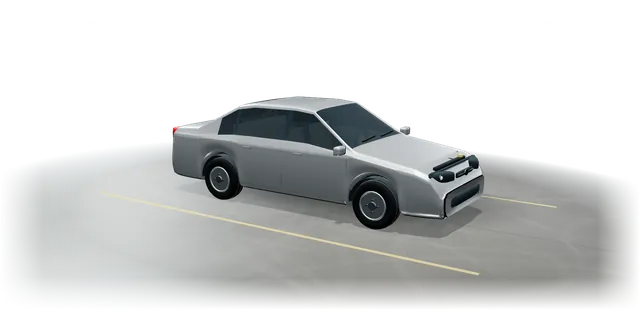
What to check on a 2003 to 2008 Toyota Corolla, and when to change it
The short answerThe 2003 to 2008 Corolla uses a 1.8-liter engine with a timing chain, so there’s no timing belt to replace. We change the oil every 5 months or 5,000 miles, whichever comes first, and rotate the tires with it. Check the oil level often on high-mileage cars. Iridium spark plugs are due at 120,000 miles. Check your VIN for open airbag and engine computer recalls. Call (805) 745-1992.
See our services on a 3D car
Pick one of our services, or start with what your car is doing. All 36 parts are named, with what to check and when to change each one.
It loads only when you ask, so this page stays fast.
Drag to turn the car. Pinch, or hold Ctrl and scroll, to zoom. Pick a service and the car turns see-through so its parts stand out.
Start here
Pick a service
Choose one of our services and the car shows every part it covers. Not sure which? Switch to “By symptom” and start with what it’s doing.
What to ask about, and when
Pick the point closest to where you are. You’ll get the list of what usually comes up around then, and you can show it on the car.
Last updated October 19, 2026.
This is a simplified model, not a factory drawing. Part positions are approximate and intervals are typical ranges. Your owner’s manual, your service records and how you drive decide the real schedule. Under-hood positions follow the usual layout for this model and were not checked against a factory drawing. Specifications come from Toyota’s owner’s manual and maintenance guide, listed below. We’ll tell you what we see when you bring it in.
Open a system to read about its parts: what each one does, what to check, when to change it, and the service that covers the work.
Engine 7 parts
1Engine oil and filter
Owners report this one
Oil keeps the moving parts of the engine from grinding on each other and carries heat away. The filter catches the grit.
What to check
Pull the dipstick at the front of the engine with the car level and the engine off for a few minutes. The level should sit between the two marks. Owners report this 1.8-liter engine can use oil as the miles add up, so check it at every other fill-up on an older car.
When to change it
We change oil and filter every 5 months or 5,000 miles, whichever comes first. The manual calls for SAE 5W-30. The 2007 manual lists 4.4 quarts with a filter. Earlier manuals listed 3.9 quarts, so fill by the dipstick.
Four spark plugs light the fuel in each cylinder. Each plug has its own ignition coil sitting on top of it.
What to check
A rough idle, a stumble when pulling away or a flashing check engine light can point to a worn plug or a failing coil. Some owners report coil failures at higher mileage.
When to change it
Toyota’s 2006 guide lists the iridium plugs at 120,000 miles. The 2007 manual specifies Denso SK16R11 or NGK IFR5A11 and says to use only iridium-tipped plugs.
The air filter keeps dust out of the engine. A clean one helps the engine breathe and protects the airflow sensor.
What to check
Open the clips on the air filter box and lift the filter out. If it is gray and packed with dirt or leaves, it is time. A dirty airflow sensor next to it is a commonly reported cause of a lean code and a check engine light on this car.
When to change it
Toyota’s 2006 guide lists a new engine air filter every 30,000 miles. Change it sooner on dusty roads.
These rubber seals keep oil inside the top and side of the engine. They harden with age and heat.
What to check
Look for wet, dark oil around the edge of the valve cover and down the passenger side end of the engine. A burning oil smell after a drive is another sign. Leaks at the valve cover gasket and the timing chain tensioner seal are commonly reported on this engine.
When to change it
There is no set interval. They are replaced when they leak. Toyota’s guide also lists a valve clearance inspection from 60,000 miles.
Rubber mounts hold the engine and transaxle in the car and soak up vibration.
What to check
Feel for a thump when you shift between drive and reverse, or extra shake at idle with the air conditioning on. Those are typical signs of a tired mount on any front-wheel-drive car.
When to change it
No set interval. Mounts are replaced when the rubber cracks or collapses, typically at high mileage.
One long belt turns the alternator, water pump, power steering pump and air conditioning compressor. A spring tensioner keeps it tight.
What to check
Listen for a squeak, chirp or rattle from the passenger side end of the engine, mostly on a cold start. Look for cracks or frayed edges on the belt. Owners commonly report a noisy belt tensioner on this engine.
When to change it
Toyota’s 2006 guide lists the first belt inspection at 60,000 miles, then every 15,000 miles or 18 months. Replace the belt when it is cracked or glazed, and the tensioner when it is noisy.
A metal chain keeps the camshafts in step with the crankshaft. This engine has a chain, so there is no timing belt.
What to check
Listen for a rattle from the passenger side end of the engine for a second or two on a cold start. Low or dirty oil is what wears a chain and its tensioner.
When to change it
There is no scheduled replacement. Regular oil changes are the best care for it. It is only replaced if it becomes noisy or stretched.
The water pump pushes coolant through the engine and radiator. It is driven by the drive belt.
What to check
Look for dried pink or white crust or a damp trail below the pump on the passenger side end of the engine. A grinding noise or a slowly dropping coolant level are other signs. Owners report water pump leaks on this engine.
When to change it
No set interval. It is replaced when it leaks or the bearing gets noisy.
The radiator sheds engine heat to the outside air. An electric fan pulls air through it when the car is slow or stopped.
What to check
With the engine cold, squeeze the big hoses. They should feel firm, with no bulges or soft spots. Look for green or pink stains on the radiator seams. Never open the radiator cap hot.
When to change it
No set interval. Hoses and the radiator are replaced when they leak, swell or crack with age.
Coolant carries heat from the engine to the radiator and stops the system from freezing or rusting inside.
What to check
Look at the see-through overflow bottle with the engine cold. The level should sit between the low and full lines. Never open the radiator cap hot. If the level keeps dropping, have it checked.
When to change it
The 2007 manual specifies Toyota Super Long Life Coolant. Toyota’s 2006 guide lists the first change at 100,000 miles, then every 50,000 miles or 60 months. Earlier cars may use a different coolant and interval, so check your manual.
A belt-driven compressor pumps refrigerant through a condenser in front of the radiator to cool the cabin.
What to check
Run the A/C on a warm day. Notice air that isn’t cold, a compressor that clicks on and off quickly, a musty smell, or water on the passenger floor. Look for oily residue on the A/C lines and fittings.
When to change it
There is no set interval. It gets repaired when it stops cooling or leaks. A clogged cabin air filter also weakens the airflow.
We service car A/C. See our A/C repair page, or call (805) 745-1992.
The fuel cap and a charcoal canister trap fuel vapor so it does not escape into the air.
What to check
A check engine light after a fill-up is commonly a loose or worn fuel cap on this car. Click the cap until it ratchets. Pull the lever on the floor by the driver’s seat to open the fuel door.
When to change it
No set interval. A worn cap seal or a leaking vapor canister is replaced when a leak test shows it.
Ask us about check engine lights and fuel vapor leaks on your Corolla.
13Exhaust pipe, flex joint and muffler
Owners report this one
The exhaust carries burned gases from the engine through the catalytic converter and muffler to the back of the car.
What to check
Listen for a louder engine note, a ticking under the hood or a rattle from under the floor. Owners report exhaust leaks at the flex pipe and flanges, and loose heat shields.
When to change it
No set interval. Sections are repaired or replaced when they leak or rust through.
Ask us about exhaust work on your car.
34Catalytic converter and oxygen sensors
The catalytic converter cleans the exhaust. Oxygen sensors before and after it tell the engine computer how the engine and the converter are doing.
What to check
A check engine light is the usual sign. Listen for a rattle from under the car, and notice a rotten egg smell or a loss of power. A very loud exhaust right after start-up can mean the converter was stolen.
When to change it
Replaced when it fails, is damaged or is stolen. In California a replacement converter has to be a part approved for the car.
Call and ask about converter and exhaust work before you bring it in.
Drivetrain 2 parts
14Transmission fluid
The fluid lubricates and cools the 4-speed automatic and makes its shifts happen. The 5-speed manual uses gear oil.
What to check
On the automatic, the fluid should be red and clean, with no burnt smell. Watch for slow or harsh shifts. Some owners report shifting trouble at higher mileage.
When to change it
The 2007 manual specifies Toyota ATF Type T-IV for the automatic and 75W-90 gear oil for the manual. Toyota’s guide lists inspection every 30,000 miles and replacement at 60,000 miles for towing or hard use. A drain and refill around 60,000 miles is common practice.
The front disc brakes do most of the stopping. Pads squeeze a vented steel rotor at each front wheel.
What to check
Listen for a squeal or a grinding noise. Feel for a shake in the steering wheel when you brake. You can often see the pad thickness through the wheel.
When to change it
Toyota’s guide lists a brake inspection every 5,000 miles. The manual gives a wear limit of 1 mm for pads. Most shops suggest replacing them well before that.
Most of these cars have drum brakes at the rear, with shoes that press out against a drum. The XRS has rear discs. The parking brake works on the rear wheels.
What to check
A parking brake lever that pulls up very high, or a scraping noise from the back, means the shoes need a look. The manual lists 6 to 9 clicks for the parking brake.
When to change it
Rear shoes typically last much longer than front pads. They are inspected with the fronts and replaced when the lining is thin.
Brake fluid carries the push from your foot to the brakes at each wheel. It soaks up moisture over the years.
What to check
The reservoir is at the back of the engine bay in front of the driver. The level should sit between the lines and the fluid should be a clear amber. If the pedal sinks or feels spongy, don’t drive.
When to change it
The manual specifies DOT 3 fluid. Toyota gives no fixed change interval for this car. A flush every 2 to 3 years is typical general guidance.
A MacPherson strut at each front wheel holds the spring and the shock absorber in one unit. Sway bar links tie the two sides together to limit body roll.
What to check
Push down on a front corner. It should rise and settle once. Look for oil on the strut body and listen for clunks over bumps. Owners report strut and sway link replacement past 100,000 miles.
When to change it
No set interval. Struts typically wear out somewhere past 80,000 to 100,000 miles. An alignment is needed after front strut work.
Ask us about strut and suspension work on your Corolla.
The steering rack turns the front wheels. A tie rod at each end connects it to the wheel hub.
What to check
Feel for looseness, a wander on the freeway or a steering wheel that sits off center. The manual says steering wheel free play should be less than 30 mm. Uneven front tire wear is another clue.
When to change it
No set interval. Tie rod ends are replaced when they have play. The wheels are aligned afterward.
This Corolla has hydraulic power steering. A belt-driven pump pushes fluid to the rack to make the wheel easy to turn.
What to check
Find the small reservoir listed in the manual’s under-hood diagram and check the level against the marks. A whine when you turn the wheel or wet hoses mean it needs attention.
When to change it
The 2007 manual specifies Dexron II or III automatic transmission fluid. Toyota gives no fixed change interval. Top it up only with the right fluid and have leaks fixed.
Ask us about power steering leaks or noise on your Corolla.
Four tires are the only parts of the car that touch the road. They carry the load, steer and stop the car.
What to check
Check pressures cold once a month. The 2007 manual lists 30 psi for the 15 inch tires and 32 psi for the 16 inch tires. Look for uneven wear, cracks and nails. The factory sizes are P185/65R15, P195/65R15 and 195/55R16.
When to change it
Toyota’s guide lists a rotation every 5,000 miles. Replace tires when the tread reaches the wear bars or the rubber is cracked with age.
Steel or alloy wheels hold the tires. Most of these Corollas have 4 lug nuts per wheel. The XRS has 5.
What to check
Feel for a shake in the steering wheel at freeway speed, which commonly means a wheel needs balancing. Look for bent rims and missing wheel covers. The manual lists a wheel nut torque of 76 ft-lb.
When to change it
No set interval. Wheels are balanced when new tires go on or when a vibration shows up.
A compact temporary spare, the jack and the tools ride under the trunk floor.
What to check
Lift the trunk floor and check the spare’s pressure a few times a year. The 2007 manual lists 60 psi for the compact spare. Make sure the jack and wrench are there.
When to change it
A compact spare is for short trips at low speed. Replace it if the rubber is cracked with age.
The battery starts the engine and steadies the car’s electrical system.
What to check
Look for white or green crust on the terminals and make sure the clamps are tight. A slow crank in the morning is the usual early warning. The manual lists 12.6 to 12.8 volts for a fully charged battery.
When to change it
Batteries typically last about 4 to 6 years. Have it tested once a year after year 3.
The starter is a strong electric motor that spins the engine to get it running.
What to check
A single click or no sound at all when you turn the key can mean a worn starter. Have the battery tested first, since a weak battery acts the same way. Owners report starter failures on higher mileage cars.
Fuses protect each electrical circuit. If something shorts, the fuse blows before the wiring is hurt.
What to check
If one item stops working, such as the wipers or the radio, check its fuse first. One fuse block is under the hood on the driver side. The other is under the dash on the driver side.
When to change it
Fuses are replaced only when they blow. Use the same amp rating. A fuse that keeps blowing needs a proper diagnosis.
The lights let you see the road and let other drivers see you.
What to check
Walk around the car once a month with the lights on. Have someone press the brake pedal while you look at the rear. Cloudy headlight lenses cut the light at night.
When to change it
Bulbs are replaced when they burn out. It is common to change headlight bulbs in pairs.
The engine control module is the computer that runs the fuel, the spark and the automatic transmission shifts.
What to check
Toyota recalled 2005 to 2008 Corollas with the 1ZZ-FE engine because cracks could form on the module’s circuit board. Signs were a check engine light, harsh shifts, a no-start or the engine stopping while driving. Check your VIN at nhtsa.gov/recalls.
When to change it
No set interval. Under the recall, dealers inspect the module and replace it if needed.
Ask us to help you look up open recalls on your Corolla.
The alternator recharges the battery and powers the electrics while the engine runs. The drive belt turns it.
What to check
Watch for a battery warning light, dim or flickering lights, or a battery that keeps going flat. A whine or growl from the belt end of the engine can be its bearings. We can test the charging output.
When to change it
Replaced when it tests weak or fails. There is no set interval.
Rubber blades clear the windshield. A small pump sprays washer fluid from a bottle under the hood.
What to check
Look for streaks, chatter or torn rubber. Top up the washer bottle. It has the blue cap at the front passenger side of the engine bay.
When to change it
Blades about every 6 to 12 months, sooner in strong sun.
We stock Michelin wiper blades in the front office. Ask us to fit a pair.
Frame and body 2 parts
4Cabin air filter
The cabin filter cleans the air that comes through the heater and air conditioning vents. Toyota’s guide lists it as fitted on some cars only.
What to check
If the fan sounds busy but little air comes out, or the vents smell musty, the filter may be clogged. On cars that have one, it sits behind the glove box.
When to change it
Toyota’s 2006 guide lists a cabin filter change every 20,000 miles on cars that have one. Dusty or smoky air shortens that. Check your manual.
Ask us to check whether your Corolla has a cabin filter when you are in for an oil change.
32Airbags and recall checks
Owners report this one
Front airbags work with the seat belts in a crash. Several recalls cover the airbags on these cars.
What to check
Recalls cover Takata front passenger airbag inflators that can rupture, plus the airbag control module on some 2003 and 2004 cars. NHTSA issued a Do Not Drive advisory in January 2024 for unrepaired 2003 and 2004 Corollas. Check your VIN at nhtsa.gov/recalls. An airbag light that stays on needs a diagnosis.
When to change it
Recall repairs are done free by a Toyota dealer.
Ask us to help you look up your VIN for open recalls.
Questions owners ask
Does the 2003 to 2008 Corolla have a timing belt or a timing chain?
It has a timing chain. Both the 1.8-liter 1ZZ-FE engine and the 2ZZ-GE engine in the XRS use a chain, so there is no timing belt to replace on a schedule. Clean oil at the right level is what keeps the chain and its tensioner healthy.
What oil does it take, and how much?
Toyota’s manual calls for SAE 5W-30. The 2007 owner’s manual lists 4.4 quarts with a filter for the 1ZZ-FE engine. Earlier manuals listed 3.9 quarts and Toyota later revised the figure to 4.4 quarts in a service bulletin. Always confirm the level on the dipstick after a change.
How often should the oil be changed?
We change the oil and filter every 5 months or 5,000 miles, whichever comes first, and Toyota’s 2006 maintenance guide lists a tire rotation every 5,000 miles. Owners report that this engine can use oil as the miles add up, so check the dipstick between changes.
When are the spark plugs and coolant due?
Toyota’s 2006 guide lists iridium spark plugs at 120,000 miles. It lists the first coolant change at 100,000 miles, then every 50,000 miles or 60 months. Early cars may differ, so check your manual.
What recalls should I know about?
Toyota recalled 2005 to 2008 Corollas with the 1ZZ-FE engine for an engine control module that could crack and cause stalling. There are several airbag recalls for 2003 to 2008 cars, including Takata front passenger inflators. NHTSA issued a Do Not Drive advisory in January 2024 for unrepaired 2003 and 2004 cars. Check your VIN at nhtsa.gov/recalls.
What transmission fluid does the automatic use?
The 2007 owner’s manual specifies Toyota Genuine ATF Type T-IV for the 4-speed automatic. The power steering uses a different fluid, Dexron II or III automatic transmission fluid. The 5-speed manual uses 75W-90 gear oil.